Employee Introduction

Integrating core pharmacokinetic knowledge with biological modeling and AI
to drive innovation in drug metabolism and pharmacokinetics research.

Researcher(DMPK Research)
2016 — Entered the company after completing studies in pharmaceutical sciences
Taking on the role of research leader in my third year, I have demonstrated my capabilities in projects advancing to the clinical stage.
Since joining the company, I have been continuously involved in pharmacokinetic research. In my early years, I was responsible for in vivo pharmacokinetic evaluation of small molecule compounds. While participating in projects such as those in the renal disease field, I deepened my understanding of gastrointestinal absorption and systemic disposition. Looking back, those years were the foundation for my career as a pharmacokinetic researcher.
From my third year onward, I proactively requested to take on pharmacokinetic evaluation for antibody and nucleic acid therapeutics. Around this time, I was appointed research leader for pharmacokinetics and have been involved in six projects. One of these projects which I have supported since the early stages of drug discovery has now progressed to the clinical stage. The major challenge for this project was how to explain and justify the appropriate dosage for use in humans as the project moved toward the clinical stage. By combining pharmacokinetic evaluation with modeling and simulation techniques, I was able to contribute to resolving this challenge. I feel the greatest sense of accomplishment and joy when I break through such difficult barriers and successfully advance a project to the next stage.
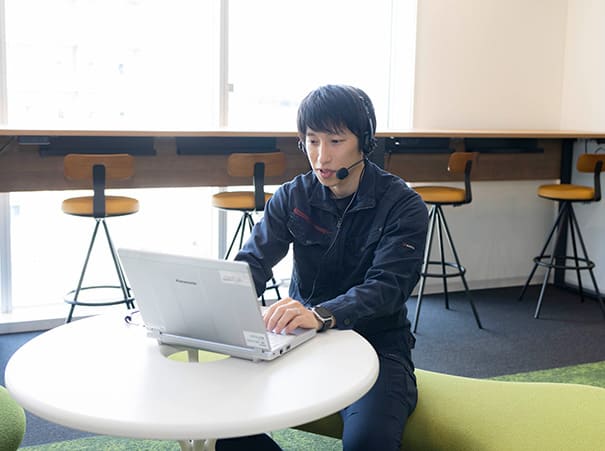
Leveraging core expertise in pharmacokinetics to pursue predictive models integrating biological modeling and AI.
In addition to being involved in projects as a pharmacokinetics research leader, I am leading initiatives to apply AI in pharmacokinetic research. In recent years, the application of AI in drug discovery has rapidly advanced, raising expectations for faster and more efficient R&D, and pharmacokinetic research is no exception. If AI-based clinical prediction models can be established, we could evaluate pharmacokinetics with clinical relevance even in animal model studies. This would significantly accelerate the research. However, there are several challenges associated with applying AI in drug discovery. For example, in addition to the inherently limited clinical data available for AI training, the “black box” nature of AI poses a major challenge when it comes to supporting decision-making.
I have been interested in the use of digital technologies in drug discovery since I joined the company, and from my second year onward I proactively volunteered to work on modeling and simulation techniques, steadily deepening my expertise in biological modeling. Approaches based on biological modeling allow us to make theory-driven predictions even from limited data, making them extremely effective in addressing the challenges faced by AI that I mentioned earlier. Currently, I am working to develop clinical prediction models that integrate biological modeling with AI, and I am actively sharing the findings through conference presentations and journal publications. The application of AI is a common theme across our R&D department, and we are promoting it company-wide by establishing cross-departmental working groups and advancing collaborations with academia to incorporate cutting-edge technologies.
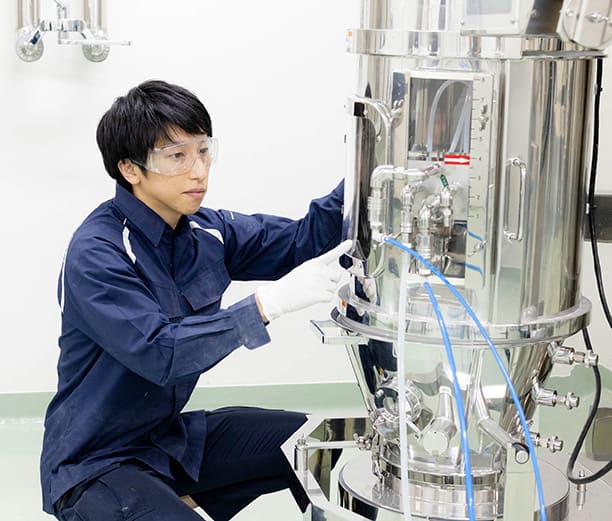
A corporate culture that encourages taking on challenges—making pharmacokinetic research even more exciting.
I want to contribute to people's health by creating new drugs. That was my genuine attraction to this kind of work which sparked my interest in pharmaceuticals. I pursued drug discovery research at university and focused my job search on pharmaceutical companies. What ultimately led me to choose Tanabe Pharma was the character of its people. Every senior employee I met at company briefings and other events was gentle and sincere, and I honestly felt that I wanted to work with them. That impression has not changed even now, ten years after joining the company. There is a well-established culture in which each employee deepens their own expertise as a researcher while also actively and generously sharing knowledge with others. In addition, there is a corporate culture that encourages a challenging spirit, as seen in the AI application project I am working on.
Recently, I have felt that the role of pharmacokinetics in drug discovery is becoming increasingly significant. For instance, there is a growing focus not only on evaluating the drugs themselves but also on the dynamics of endogenous biomarkers. As the application of AI advances in parallel, there will be even more opportunities to contribute to accelerating drug discovery. I am truly excited that pharmacokinetic research will become even more fascinating in the future. While further deepening my core knowledge and skills as a pharmacokinetic researcher, I would like to take on the challenge of applying AI and integrating these approaches to contribute to innovation in drug discovery and to the continued growth of Tanabe Pharma.
- Career step
- 2016 Entered the company after completing studies in pharmaceutical sciences
2018 Took on new responsibilities in pharmacokinetic research for antibody and nucleic acid therapeutics
During this period, began working on the application of modeling and simulation techniques
2020 Launched research on the application of AI in pharmacokinetic research with the aim of integrating biological modeling with AI
* The affiliation and description in the article are those at the time of interview.