Employee Introduction
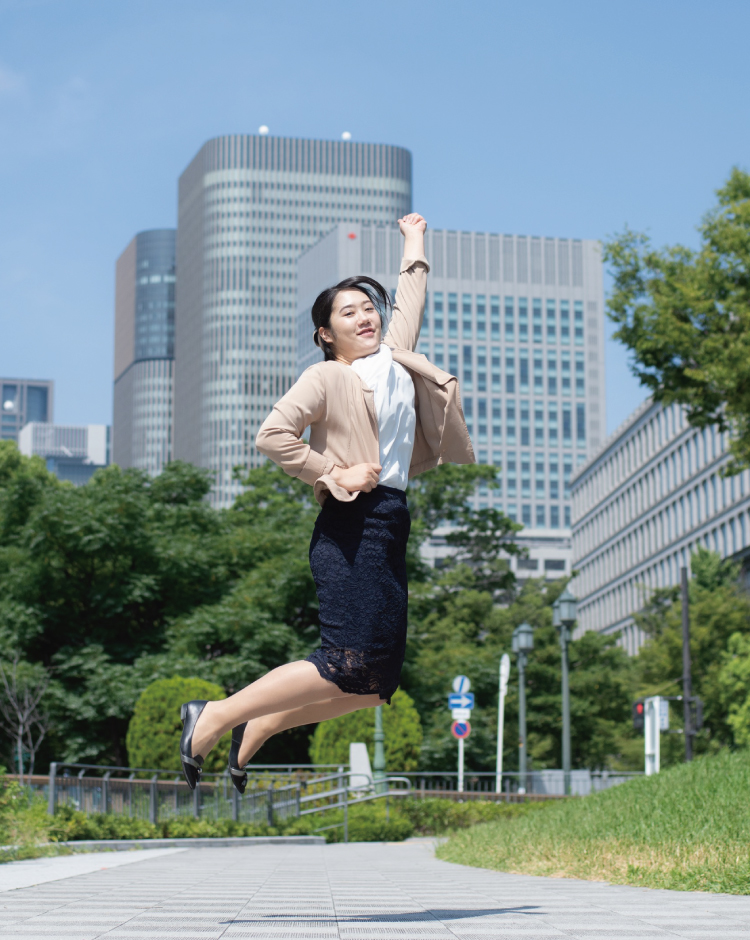
Building on trust to grow as a specialty MR,
bringing new hope to people with rare diseases

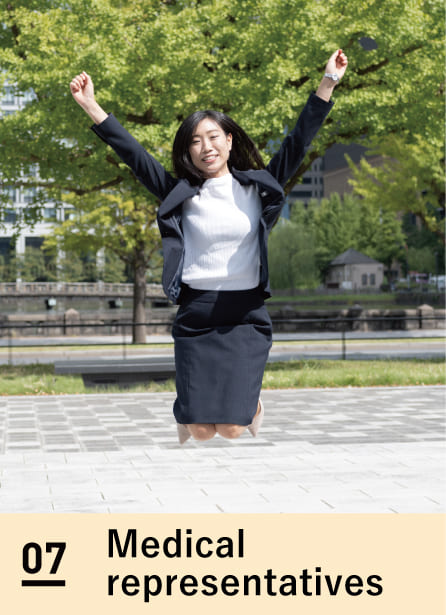
Medical representative (MR)
2017―Entered the company after graduating from the faculty of economics
Turning concerns about my non-science background into action and building a strong foundation as an MR
As an economics student, I became interested in the role of a medical representative (MR) while researching industries during my job search. I realized that even with a non-science background, I could indirectly contribute to patients’ health and well-being by providing doctors with the latest medical information as part of a life sciences company. I wanted to pursue work with such meaningful value to society.
What ultimately led me to choose Tanabe Pharma was the people I met during the internship program. I participated in internships at six or seven companies, but Tanabe Pharma stood out for its warm and sincere atmosphere. I still remember how thoughtfully its employees supported me throughout my job search. I felt certain that a culture where people respect each person’s individuality, support one another, and steadily grow together was the best fit for me. Although I had concerns about acquiring the necessary scientific knowledge, I was able to take the first step with confidence.
After joining the company, I was assigned to the Yokohama Branch, where I spent approximately eight years primarily working with diabetes treatments. At one point, I was responsible for around 100 healthcare institutions, ranging from local clinics to major hospitals.
One principle I valued from the start in Yokohama was staying proactive and maintaining regular contact with doctors. I resolved to visit doctors more frequently than competing MRs, making a point of meeting them once a week, or at least once every two weeks. I believed that becoming a familiar and trusted presence was the first step toward having our products considered. Whenever I received a question during a visit, I would research it thoroughly and follow up with an answer. Repeating this process enabled me to steadily build my expertise.
My other guiding principle was to anticipate needs and create opportunities for meaningful exchange. I planned and organized educational seminars designed to support clinical practice in my territory. By inviting leading doctors in the area to serve as chairs or speakers and encouraging other local doctors to participate, I sought both to contribute to regional healthcare and to strengthen awareness of our products.
Through this consistent engagement and the opportunities I created, I could see my relationships with doctors steadily deepen. The experience of engaging with doctors patiently and persistently remains a major source of confidence and a foundation for my work today.
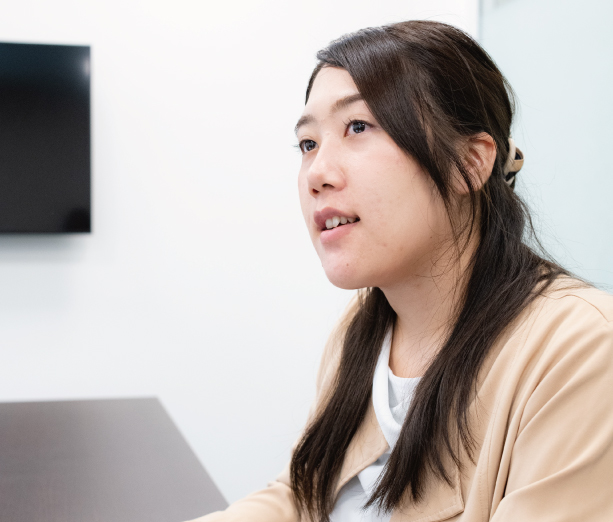
In a completely new environment, six months of persistent effort began to bear fruit
In my ninth year with the company, I reached a major turning point in my career. I transferred to Nagoya to take responsibility for university hospitals and transitioned from an MR in a primary care role to a specialty MR. I began working with UPLIZNA®, a treatment for rare diseases including neuromyelitis optica spectrum disorder and IgG4-related disease. The level of disease-specific expertise required was far greater than in my previous role, and my work became centered on neurologists at university hospitals and major hospitals.
The first six months after moving to Nagoya were the most challenging period of my career as an MR. My success in Yokohama may have led me to assume that I could adapt quickly and achieve similar results in any environment, however, both the environment and the product were different, and for some time I struggled to apply my previous experience and strengths effectively. Even so, the groundwork I continued to lay throughout those difficult months ultimately became a major source of growth.
A turning point came when I changed the way I engaged with a neurologist after making little progress. In the winter of my ninth year, UPLIZNA received approval in Japan for IgG4-related disease, and our company launched activities nationwide to communicate information supporting its appropriate use. As I continued providing information, the doctor began asking more questions. By responding carefully and consistently, I was able to support renewed consideration of UPLIZNA as a treatment option. With guidance from my manager and senior colleagues, I focused on prompt responses and sincere, accurate communication. As a result, UPLIZNA came to be recognized across the hospital as one of the available treatment options.
Later, I learned that UPLIZNA was being considered for a patient who had transferred to the hospital. Because UPLIZNA is administered once every six months, it was well suited to the patient’s lifestyle. When I learned that treatment had actually begun, the sense of fulfillment was unlike anything I had experienced before.
Through those six challenging months, I came to understand the significance of every individual case and what it truly means to engage sincerely with each doctor and each patient whose care may be affected by my work. The experience fundamentally reshaped my mindset as a specialty MR.
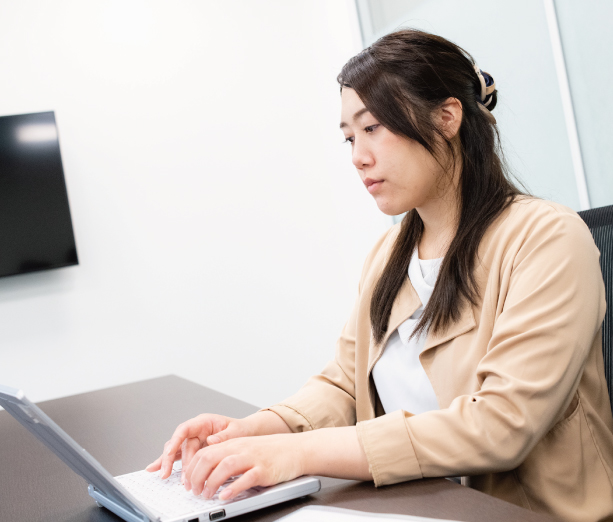

Putting patients’ interests first, I continue to grow as an MR trusted for both expertise and integrity
The perspective I have consistently valued throughout my work as an MR is putting patients first. Although MRs do not meet patients directly, I always try to imagine how I would feel if the patient were my own parent or another member of my family. At times, this means not pushing our own product and honestly respecting a doctor’s decision when another company’s product may better serve the patient’s interests. I believe that this kind of sincere and balanced communication is what ultimately earns the lasting trust of doctors.
UPLIZNA, the product I currently support, is a treatment in which each administration can have a meaningful impact on a patient’s life and also a flagship product for the future of our company. I remain keenly aware of the responsibility involved in helping deliver its therapeutic benefits. To help make a new treatment option available to as many people living with rare diseases as possible, I continue to deepen my expertise and communicate safety information that supports appropriate use.
The greatest strength of our company is, without question, its people. When I faced the major changes of relocating to Nagoya and moving into a specialty field, it was the people around me who eased my initial concerns. We have an open culture where people feel comfortable asking questions and admitting when they do not know something, and colleagues who embrace change and adapt quickly to evolving market conditions. Knowing that I can count on outstanding people wherever I work has also allowed me to genuinely enjoy my life in Nagoya.
Now in my tenth year, I am proud to be part of a company where I can continue growing without fear, even in unfamiliar environments. Going forward, I want to become an MR who identifies patients’ unmet needs and challenges in treatment through dialogue with healthcare professionals, helps them better understand the value our products can offer, and helps deliver hopeful options to everyone living with illness. In a time of significant change, I want to think independently, combine my strengths with those of the people around me, and pursue new possibilities. Together with colleagues who bring both warmth and a high level of expertise, I am confident that we can turn steady progress into meaningful results.
- Career step
- 2017 Yokohama Branch: Served as an MR responsible for local clinics and major hospitals
2025 Immunology Sales Division, Central Japan Group: Serving as an MR responsible for university hospitals and major hospitals
* The affiliation and description in the article are those at the time of interview.