We will provide a stable supply of high-quality pharmaceuticals to patients around the world.
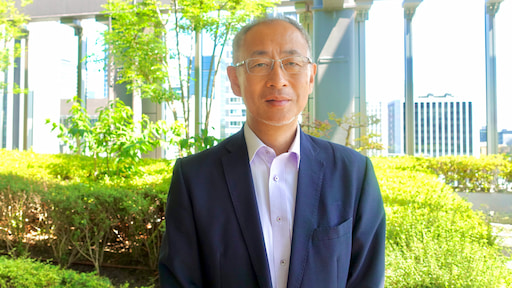
See here for a message from the Head of Product Supply Division.
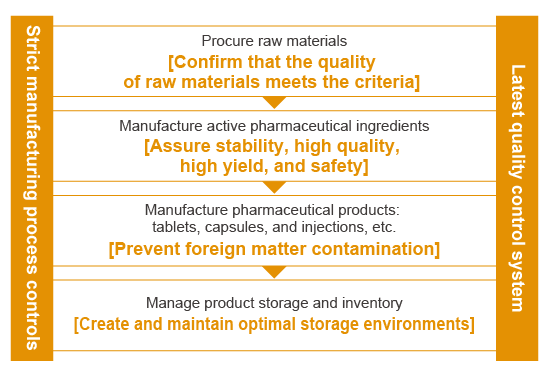
The Group manufactures and supplies high-quality pharmaceuticals and strictly controls product quality from acceptance testing of raw materials procured in Japan and overseas to the manufacture of GMP-compliant active pharmaceutical ingredients and drug products as well as testing and inspection, thus supplying premium quality products which patients and healthcare professionals can use safely and with peace of mind.
As a global research-driven pharmaceutical company, we manufacture pharmaceuticals based on a wide range of technologies and proprietary know-how developed over many years. To further ensure quality, the Product Supply Division, the CMC Laboratories, and the Global Quality Assurance Department collaborate with the Group’s manufacturing plants to develop production technologies to enhance quality, stabilize supply, and reduce costs from the early development stages of new pharmaceutical products. In addition, the Group’s manufacturing plants (two in Japan and three overseas) together with manufacturing subcontractors are creating a global production system that delivers a stable supply of our products to many people around the world.
In 2016, we built a new manufacturing facility for solid dosage formulations within the Yoshitomi Plant in Japan. This highly productive facility can supply pharmaceuticals in accordance with global quality standards, while further contributing to both the improvement of manufacturing technologies and the reduction of manufacturing costs.
Since 2017, we have worked with BIKEN Co., Ltd., a company established from the vaccine manufacturing business of the BIKEN Foundation, to strengthen our production base and ensure a stable supply of vaccines. In 2024, we released a five-in-one vaccine (GOBIK Aqueous Suspension Syringes) that added the antigen component of Haemophilus influenzae type b (Hib) to the existing four-in-one vaccine, contributing to reducing the number of routine vaccinations required.
We have been working to diversify and decentralize our sourcing of drug substances and raw materials and to secure safety stocks of these items in order to address global supply chain uncertainty caused by the COVID-19 pandemic, the Russian Federation’s invasion of Ukraine, and the deteriorating situation in the Middle East.
These initiatives have enabled us to make meaningful progress in strengthening our production foundation. Building on trusted partnerships with our suppliers, we continue working to secure a stable supply of pharmaceutical products.
Pharmaceutical manufacturing process
In Asia, we have manufacturing/sales bases in South Korea, Taiwan, and Indonesia, and we provide products that meet the quality standards and market needs in each country.
In Asian markets—especially the ASEAN pharmaceutical market—growth is expected, and to meet this growing demand, we increased production capacity at Mitsubishi Tanabe Pharma Indonesia,*1 an Indonesian subsidiary that produces oral agents for the domestic Indonesian and ASEAN markets, and in 2015, built a new facility to manufacture drug preparations to comply with PIC/S GMP (Indonesia).*2
Tanabe Pharma Korea, a local subsidiary in South Korea, manufactures high-quality injections and other pharmaceuticals as a PIC/S GMP-compliant manufacturing facility, and supplies them to South Korea, Europe, and Japan, and also supplies some of these products to Mongolia. In addition, Taiwan Tanabe Seiyaku, a local subsidiary in Taiwan, has obtained PIC/S GMP certification and manufactures high-quality oral and external preparations. Among these, sugar-coated tablets are also exported to Japan.
In the future, we will continue to expand business in Asia, a growth market. By providing a stable supply of high-quality products, we will contribute to people around the world who want to live a healthy and prosperous life and fulfill our corporate social responsibility.
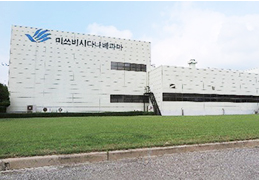
- 拡大
- Hyangnam Plant,
Tanabe Pharma Korea
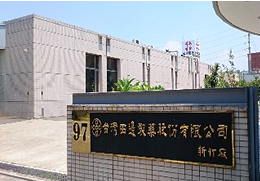
- 拡大
- Hsinchu Plant,
Taiwan Tanabe Seiyaku
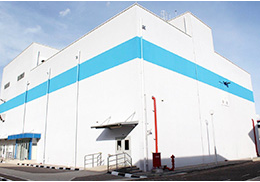
Exterior view of pharmaceutical production building,
Mitsubishi Tanabe Pharma Indonesia*1
- Mitsubishi Tanabe Pharma Indonesia changed its name to Tanabe Pharma Indonesia in October 2026.
- PIC/S: Abbreviation for Pharmaceutical Inspection Convention and Pharmaceutical Inspection Co-operation Scheme
As a pharmaceutical company, Tanabe Pharma steadily and reliably provides high-quality pharmaceuticals, when they are needed and to the patients who need them. We have built a supply system that can provide a stable supply of drugs to patients, even in the event of a disaster or other unexpected situation.
We ship pharmaceuticals to customers through a dual-base supply system comprising the New East Japan Distribution Center (Kuki City, Saitama Prefecture) and the New West Japan Distribution Center (Kobe City, Hyogo Prefecture). To reduce a variety of risks that could adversely affect a stable supply, both centers have earthquake isolation systems, in-house power generators, and redundant installations of important equipment. In this way, they are designed to be able to maintain a supply of pharmaceuticals, even during major disasters and pandemics. Even if one distribution center stops functioning, we can continue to supply pharmaceuticals from the other center. We have put measures in place that prioritize stable supply, such as constructing mechanisms that enable an immediate switch to an alternate server in another location when a system server is affected by a disaster.
We are also working to enhance stable supply on the transport front. In our distribution operations in Japan, we began joint transportation with two other manufacturers in compliance with the GDP Guidelines for the transport of pharmaceuticals. The number of manufacturers participating in this initiative has increased steadily since its launch in 2023, and it continues to operate stably. We have jointly established standards for managing transport and are transporting products efficiently by ensuring quality through temperature control during transportation from each company’s distribution centers to pharmaceutical wholesalers.
Transporting products from multiple different manufacturers in a single load lowers the number of vehicles on the roads, reducing transport costs and CO2 emissions. Initiatives such as these have been recognized for supporting the stable supply of pharmaceuticals and for the contribution they make to addressing issues faced by the entire industry, including customers, such as the transport industry, which is faced with a driver shortage.
The distribution centers employ an inventory control system that accurately and carefully monitors incoming and outgoing shipments and inventory control procedures in lot units. The introduction of the inventory control system enables the Company to appropriately store and control pharmaceuticals according to various criteria, including pharmaceutical characteristics and storage temperatures. In addition, in response to data received from higher level systems, we can rapidly conduct operations without mistakes.
We periodically conduct training for the employees who use the distribution center facilities and systems. In this way, we seek to enhance the skills of each employee and to reduce human error. At the same time, by increasing awareness of pharmaceutical distribution extending all the way to the patient, we are working to build a system that can maintain a secure, safe, and stable supply of pharmaceuticals.
Tanabe Pharma distribution centers take a rigorous approach to quality control in the distribution process. This attention to detail helps ensure that pharmaceuticals are as high in quality when they reach patients as they are when manufactured under strict GMP controls at the Company’s production plants.
The Company complies with the structural facility requirements under the Pharmaceuticals and Medical Devices Law (the Law on Securing Quality, Efficacy and Safety of Products including Pharmaceuticals and Medical Devices) of Japan and other relevant regulations as well as various operational requirements. In addition, it has constructed a system that meets the Japanese version of Good Distribution Practice (GDP) guidelines. In light of the characteristics of the pharmaceuticals that we handle, we have developed distribution policies, procedure manuals, and facilities for quality assurance (especially temperature control), proper control of the distribution process, and preventing contamination by counterfeit medicines and their distribution, which are shown in the guidelines. We strictly observe these policies and manuals in conducting our business in order to maintain distribution quality in terms of both the physical and operational aspects.
In particular, for cold storage products, which require rigorous temperature control, in addition to periodic temperature validation and thermometer calibration in cold warehouses, the Company has emergency response measures in place, including a process that provides information when abnormal or emergency conditions are detected and in-house power generators that can be used when electricity is interrupted. In this way, the Company has designed a system that can maintain appropriate temperature management, 24 hours a day, seven days a week. In recent years, the ratio of refrigerated goods we handle has increased gradually, and thus when expanding our refrigerated warehouses, we select and operate facilities that meet these conditions.
Tanabe Pharma designed its entire transportation system with a focus on supplying high-quality pharmaceuticals. Pharmaceutical products are shipped from the distribution centers via contracted transport companies that comply with predetermined transport quality standards. With an understanding of the characteristics and importance of the pharmaceuticals that they are carrying, these companies strictly supervise the transport of these products, utilizing facilities and vehicles specifically designed for loading and unloading pharmaceuticals. The Company works to maintain quality during the distribution process by carrying out regular inspections of its subcontracting transport companies, as well as using a comprehensive distribution method with precise temperature control monitoring and special insulated boxes for packing the products.
Counterfeit medicines could cause damage to the health of many patients, which is a major health and hygiene issue. To deliver quality medicines to patients, the distribution center has created a system to prevent contamination by counterfeit medicines and the distribution of medicines of questionable quality, including counterfeit medicines.
We regularly verify and record that all customers have obtained the appropriate licenses to purchase pharmaceuticals.
To strictly manage medicines, we restrict the people who can enter the storeroom of the distribution center and prescribe the method of entry. In addition, when receiving pharmaceuticals, we confirm that the delivered medicines are correct and have no visible damage.
If counterfeit medicines or medicines of questionable quality are found, we have created a system to immediately suspend sales and transport of these products, as well as to segregate and report them to government agencies.
Note: Tanabe Pharma Factory Co., Ltd., a manufacturing subsidiary, is scheduled for transfer at the end of December 2026.