Reduction of waste and promotion of resource recycling are important initiatives toward reducing environmental impact and achieving a sustainable society. At the Group, we promote effective use of resources in pharmaceutical research and production, and work toward the realization of a circular economy.
We have set reducing the amount of final waste disposal and improving our recycling rate as goals under the Medium-Term Environmental Action Plan 25–30 and will promote efforts centered on the “3Rs (Reduce, Reuse, Recycle) + Renewable.”
Waste reduction targets
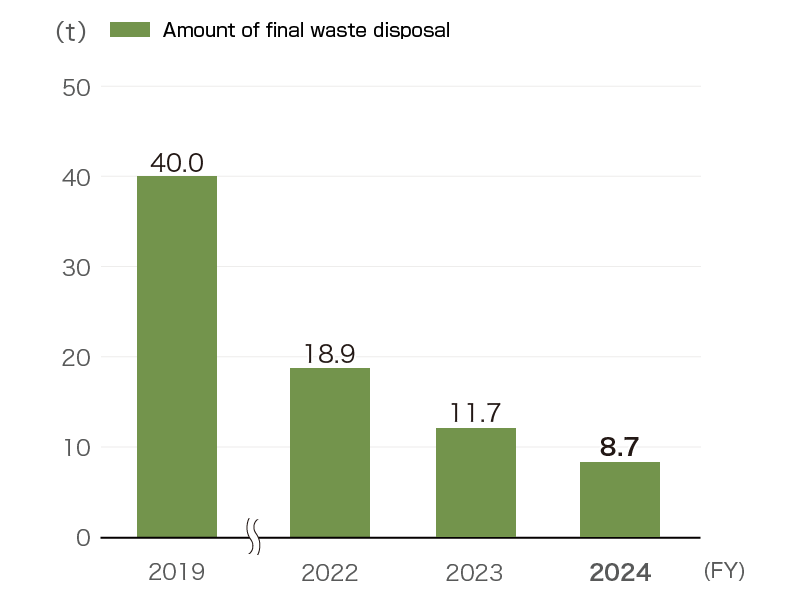
- 10% reduction in the amount of final waste disposal by fiscal 2030 compared to fiscal 2023 (Global)
- Increase of waste recycling rate to at least 65% by fiscal 2030 (Global)
- Increase of waste plastic recycling rate to at least 65% by fiscal 2030 (Japan)
As a waste-discharging enterprise, the Group properly implements and manages the conclusion of agreements with contractors for waste collection, transportation and disposal, and management of electronic manifests, and manages waste appropriately.
With regard to the selection of waste disposal contractors, we conduct onsite verification before concluding contracts and give precedence to hiring contractors that proactively recycle resources.
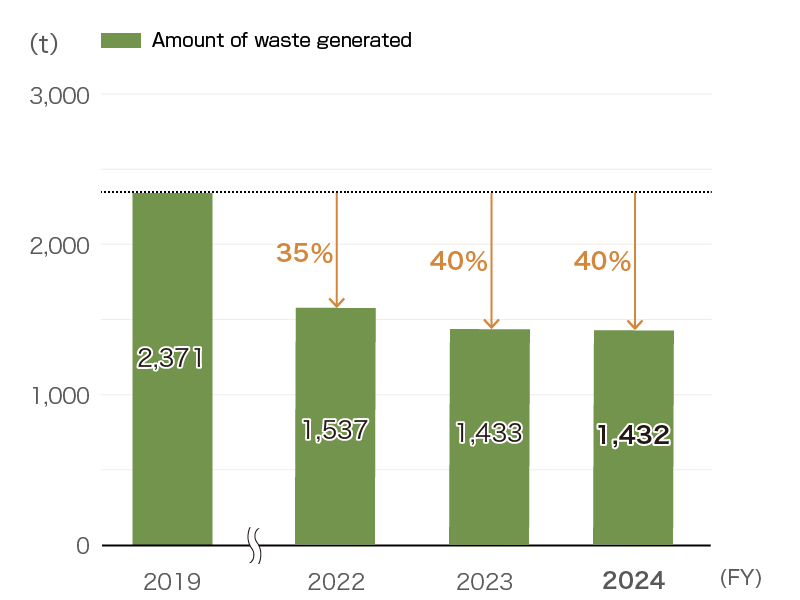
Our total final disposal volume around the world for fiscal 2025 was 44% less than for fiscal 2023. Additionally, the waste recycling rate increased to 65% due to progress in initiatives at the Indonesia plant.
Furthermore, we are promoting initiatives to treat decommissioned equipment and solvents recovered from manufacturing processes as valuable resources rather than as waste, and processed 333 tons in Japan as valuable resources in fiscal 2025.
Going forward, we will revise our processing methods and contractors and work to improve our recycling and reduce the amount of final waste disposal.
Amount of waste generated and recycling rate (Global)
Amount of final waste disposed
(Global)
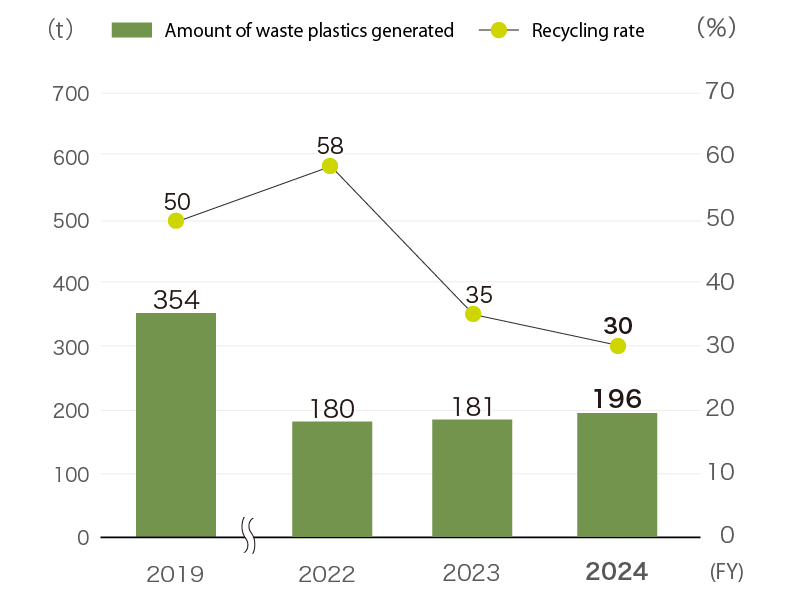
In recent years, environmental pollution caused by the discharge and long-term accumulation of plastic waste in the ocean and other environments has become a global problem. Additionally, combustion of plastic, which uses fossil resources as a raw material, leads to increased greenhouse gas emissions.
In the Group, to address these issues, we are taking measures such as adopting biomass plastic materials used for packaging pharmaceuticals and recycling waste plastics.
The Group’s recycling rate for plastic waste in Japan in fiscal 2025 was 18%. We will continue to evaluate measures aimed at expanding recycling.
Additionally, the Group manages plastic waste appropriately in accordance with the Act on Promotion of Resource Circulation for Plastics, which came into effect in April 2022. In fiscal 2025, Tanabe Pharma Corporation emitted 97 tons, and Tanabe Pharma Factory emitted 103 tons.
Amount of waste plastics generated and recycling rate (Japan)