Based on the Environment & Safety Policy, to prevent occupational accidents in the workplace, promote employee health, and develop a comfortable work environment, the Group operates management systems in accordance with Guidelines on Occupational Safety and Health Management Systems (OSHMS) presented by the Ministry of Health, Labour and Welfare.
In addition, the Group conducts regular internal safety audits to verify that safety management, legal compliance, and activities to ensure safety are being conducted in an appropriate manner, working to make improvements to workplace environments while striving to foster employee awareness of safety through education and training.
At Group offices, we have established the Health and Safety Committee, which meets once a month, as a structure for ensuring employee safety and health and creating a comfortable work environment. The committee consists of general health and safety managers (office managers and plant managers), safety managers, health supervisors, industrial physicians, and members selected by the Company and labor union.
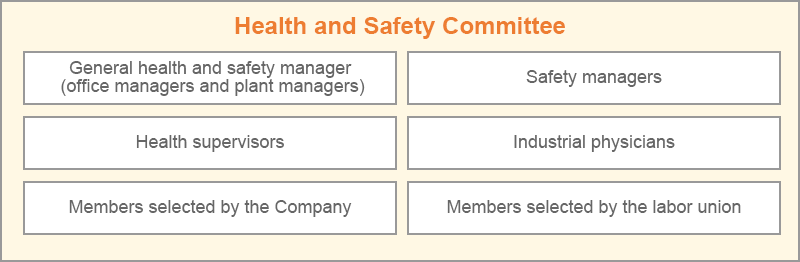
The committee reports on health and safety activities and discusses important policies for preventing occupational accidents and health disorders of employees, as well as for promoting employee health. The matters reported and discussed by the committee are communicated to all employees through measures such as the health and safety meetings held by each division.
At the Group, each office formulates health and safety objectives and implementation plans, and proactively institutes health and safety activities such as hazard recognition training, near-miss prevention activities, and workplace inspections. They also engage in periodic risk assessment to identify potential workplace risks and implement measures to reduce them.
Furthermore, to prevent occupational accidents, we are working to strengthen our safety management practices and focusing on developing employees who are able to prioritize safety in their actions. We are endeavoring to enhance each employee’s awareness of workplace risks through safety education and training, while promoting proactive efforts to identify issues and implement improvements in the workplace and working to foster a culture of safety.
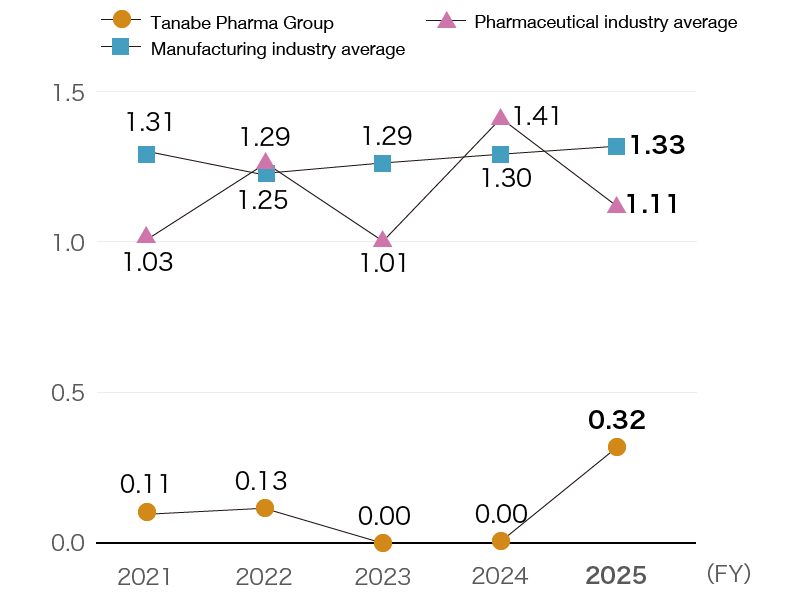
In fiscal 2025, there was one lost-time accident in our operations in Japan (involving two people), resulting in a lost-time injury frequency rate of 0.32 (no such incidents occurred in our operations overseas). In addition to rigorously implementing measures to prevent recurrence based on root cause analyses of occupational accidents, we will work to prevent such accidents by further promoting various safety measures.
Lost time injury frequency rate
-
Lost time injury frequency rate:
Number of casualties due to accidents that require time off from work per one million actual working hours (excluding commuting injuries). -
Calculation period:
For the Group, April to March the next year; for pharmaceutical industry averages and manufacturing industry averages, January to December. -
Scope:
All Group offices in Japan -
Total working hours:
Scope has included permanent employees, contract employees (including some part-time employees), and temporary employees. For permanent employees and contract employees, the indicator is calculated as actual work hours; for temporary employees, it is calculated as work hours per day x number of business days x number of employees.
- Legal compliance and worker obligations training
- Legal compliance and safety and health duty of care training
- Hazard recognition training
- Human error prevention training
- Risk assessment training (including chemical substances)
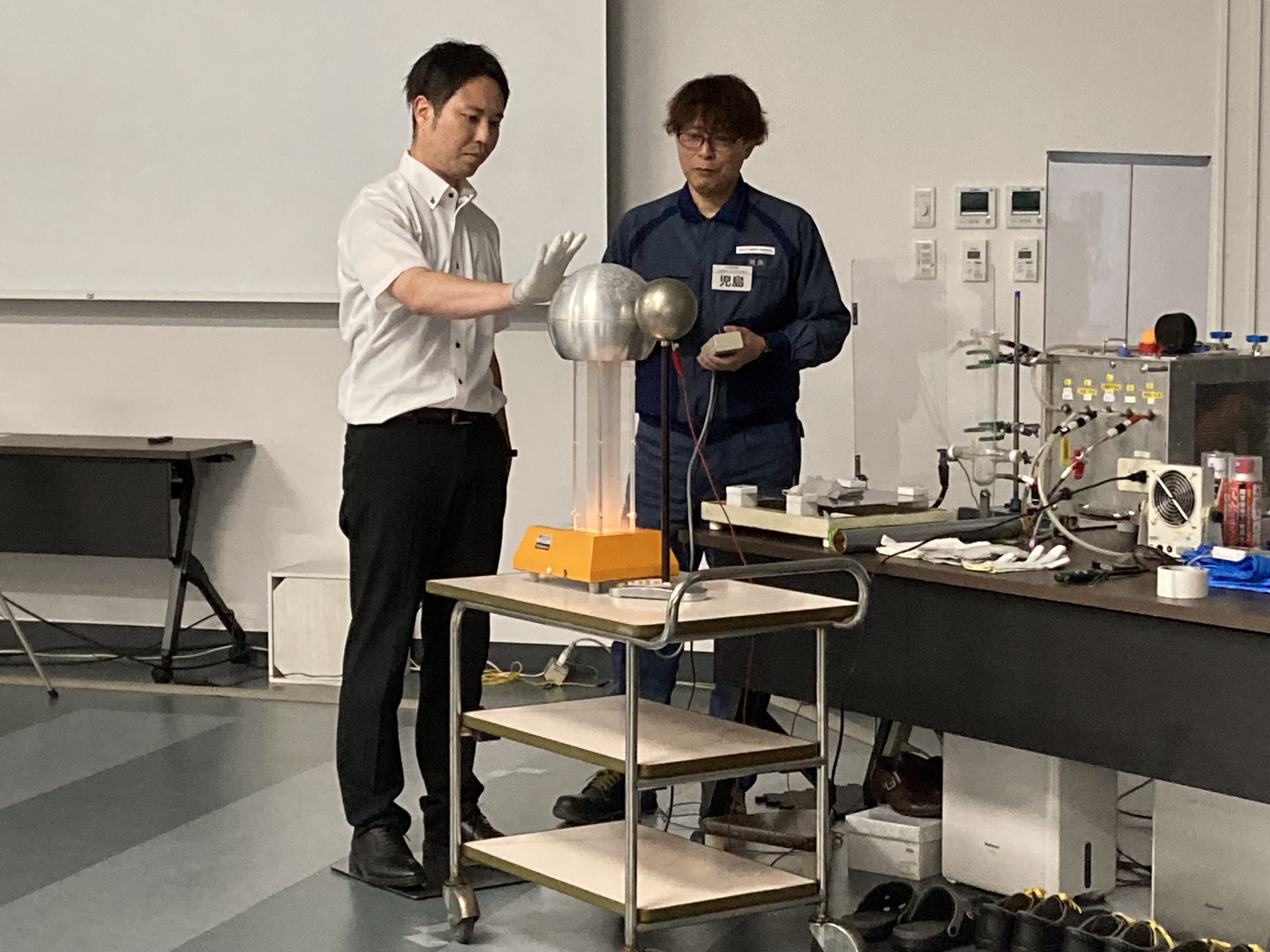
- Experiential training (fires and explosions, burns/chemical injuries, getting caught in or between equipment, handling of electricity)
- Traffic safety training
- 拡大
- Experiential training
(Mitsubishi Chemical Kyushu Plant)
As a company that handles many chemical substances, including pharmaceuticals, the Group has established internal regulations related to chemical substances including its Detailed Rules on Chemical Substance Control, which sets forth the proper handling of those substances.
Under these regulations, we assess risks from the perspectives of both hazards and exposure of people and the environment at every stage in our processes, from obtaining chemical substances through storage, transport, use, and disposal. We implement risk mitigation measures to prevent accidents and disasters involving chemical substances.
The Detailed Rules on Chemical Substance Control also specify measures to prevent or mitigate environmental pollution, damage to health, and fires or explosions caused by hazardous materials, and all employees at all of our offices are engaged in these measures on an ongoing basis.
Furthermore, in 2024, we established the “Chemical Substance Permitted Daily Exposure/Occupational Exposure Limit (PDE/OEL) Management Guidelines” and are working to reduce and manage health risks among workers who handle highly potent chemical substances and other materials.
Regarding these activities related to chemical substances, we conduct regular safety audits to ensure compliance with laws and regulations.
To prevent safety-related accidents, the Group identifies risks at each office, prioritizing them and examining measures for their removal or reduction. These measures are incorporated into the next fiscal year’s equipment investment plan, steadily advancing our improvement of unsafe facilities and equipment.
Additionally, we use safety assessments and horizontal application of near-miss reviews to implement appropriate safety measures in dangerous locations as needed and to prevent accidents and disasters before they occur.
Since fiscal 2011, the Group has implemented employee surveys at Group companies in Japan to gain a comprehensive understanding of employee attitudes toward their jobs and of the Company’s workplace health and safety environments in order to improve management initiatives. From fiscal 2019 we expanded the scope of these initiatives to include overseas Group companies.
As a result of the activities in fiscal 2025, we have on the whole maintained a good work environment and employee vitality. Based on some of the issues that have been found to increase engagement, we are promoting dialogue between management and employees, as well as initiatives at each division.